
No numbers until month-end: how owners can fix it
Many owners see sales, receivables and cash only when the accountant closes the month. How to get five trusted numbers every week, and how to check each one.
Part of the guide: Business challenges and how technology solves them

The short answer: owners wait for month-end because the numbers exist only after someone assembles them by hand. The fix is not a wall of dashboards. Pick five numbers you would act on, define each one in a sentence, make sure the data behind it is entered daily in one system, and get them every week in the same form. Where an AI tool answers questions about your books, use it only if it shows the query it ran, and test it first on answers you already know.
Why do the numbers arrive so late?
Consider a 25-person wholesaler, as an example. The owner knows roughly how the month went by the 8th of the next one, when the accountant has closed the books and filled in a spreadsheet. By then a customer who stopped paying in week one has taken three more deliveries.
The delay has ordinary causes:
- Entries are made in batches. Sales invoices are entered daily, purchase bills weekly, bank entries when the statement comes.
- The report is a manual job. Someone exports, copies, pastes and formats. It takes a day, so it is done once a month.
- Definitions drift. "Sales" is sometimes invoiced value, sometimes with GST, sometimes net of returns.
- Only one person can produce it. When the accountant is on leave, there are no numbers.
A small company does not lack data. It lacks a short, routine path from the data to the owner.
Which numbers does an owner actually need each week?
Fewer than you think. For most trading and services firms, five will do:
| Number | Defined as | What you do with it |
|---|---|---|
| Sales this week and month to date | Invoiced value before GST, net of returns | Compare with the same weeks last month |
| Receivables overdue by more than 30 days | Unpaid invoices past their due date, by customer | Call the top five |
| Payables due in the next 14 days | Supplier bills by due date | Plan the bank balance |
| Cash and bank balance | Today's figure from the books | Spot a shortfall before it arrives |
| Orders in hand or work in progress | Confirmed, not yet invoiced | See the next month coming |
Your list may differ. A services firm may swap stock for billable hours. The discipline is the definition column. Write each definition once, agree it with the accountant, and do not change it without telling everyone.
How do you get them weekly, step by step?
1. Choose the five and write the definitions. One page. This is an hour with your accountant, and it is the step most companies skip.
2. Find where each number's data is entered, and how often. If bank entries are made monthly, the cash figure cannot be weekly. Change the entry routine first.
3. Move the data that lives in loose spreadsheets. A figure built from six people's spreadsheets will never be trusted. Get the underlying records into your accounting or ERP system. This is the same job as stopping retyping between systems.
4. Produce the five numbers by hand for two weeks. Yes, by hand. You are checking that the definitions give figures the owner recognises.
5. Then shorten the path. There are three ways, from simplest to newest: a saved report in the accounting software; a spreadsheet that reads an export; or a tool that lets you ask the question in plain language.
6. If you ask in plain language, check the query. This kind of tool turns a typed question such as "which customers have not paid in 60 days?" into a database query and returns the figure. It is only trustworthy if it shows the query it ran, so that someone can confirm it counted what you meant. Our article on business intelligence without a data team explains how to test one.
7. Fix a day. Monday morning, the same five numbers, in the same order. A routine beats a clever report.
Where does DNX BI come in?
DNX BI is the business-intelligence AI in DNX OS. You ask in English or Hinglish, for example what GST is payable for last month or which receivables are overdue. It runs the query on your own data, answers with exact numbers and shows the query every time. It understands sales, GST, receivables, procurement, payroll, budgets and expenses, and it can catch problems such as duplicate payments and purchase orders approved above the limit. It runs on your own machines, which matters when the data is your books.
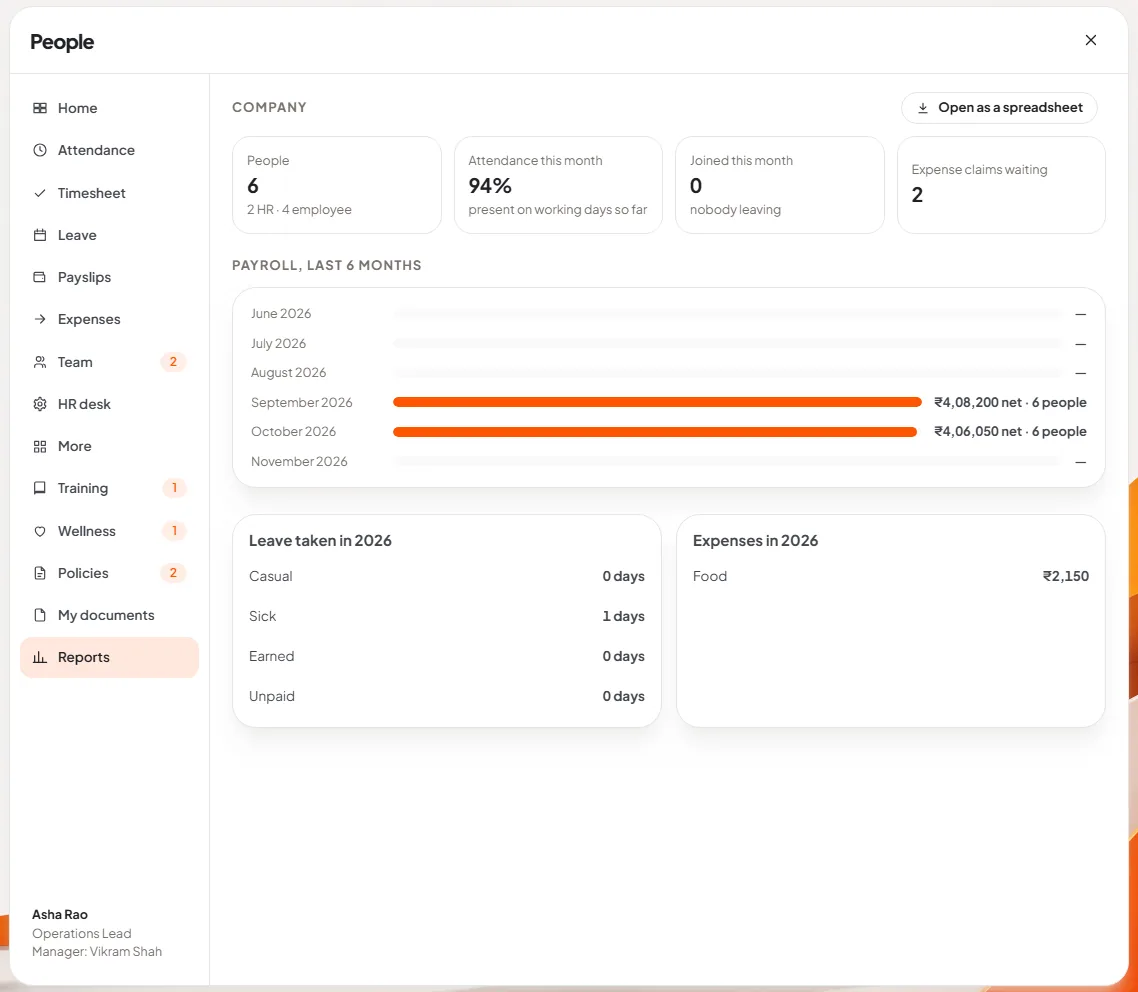
We have no screenshot of DNX BI among the published pictures of DNX OS, so we are not showing one here. What we can show is the kind of standing report that already comes with the system on the HR side: the Reports page in DNX People.
What does it cost in effort?
- Definitions: an hour or two, once.
- Daily entry discipline: this is the real cost. Someone's routine changes from weekly batches to daily entry, and it must stay changed.
- Cleaning the source data: from a day to several weeks, depending on how much lives outside the main system.
- The weekly ten minutes: the owner has to read the numbers and ask one question about them. Reports nobody reads stop being produced.
What can go wrong?
- Too many numbers. Twenty figures are scanned and forgotten. Five get acted on.
- A number nobody trusts. One wrong receivables figure and the report is ignored for a year. Reconcile each number to the books in the first month.
- The definition changes quietly. If sales suddenly includes GST, every comparison breaks.
- An AI answer taken on faith. A fluent answer is not a correct one. Begin with questions whose answers you know, and read the query.
- The data is not there. No tool can report orders in hand if orders are kept in a notebook.
- Sensitive data sent outside. Uploading your ledger to a public AI service to "analyse" it is a disclosure. See shadow AI and a policy that works.
What should you do this week?
Write the five definitions, and ask your accountant which of them could be produced today without a day's work. The answer tells you where the delay really is. Other everyday problems of this kind are in the guide to business challenges and how technology solves them.
DNX BI enters the DNX OS beta in December 2026, ahead of the launch in January 2027, and beta companies can run it against their own questions. Registered Indian businesses with 5 to 50 people can apply for the beta. If your numbers are locked inside an older ERP that nothing can read, that is a legacy modernisation project, and you can contact us about it.
Keep reading
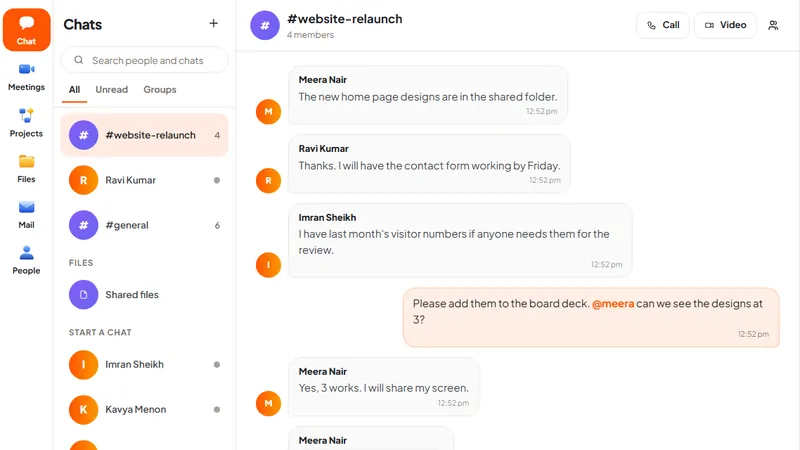
Branches on WhatsApp groups: moving to company chat
A team spread across branches runs on consumer chat apps and personal numbers. What that risks, and how to move to a company chat in four weeks, step by step.
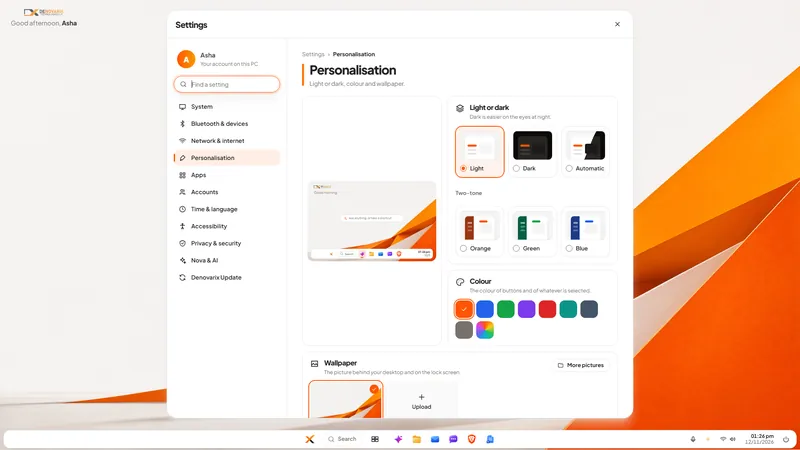
Onboarding a new employee's PC and accounts in a day
A new joiner often waits a week for a laptop, email and logins. A checklist that gets the PC, accounts and access ready in one day, and closes them at exit.

Staff using public AI with company data: what to do
Your staff already paste contracts and customer data into public AI tools. A six-step plan to find out, set rules, and give them a safer tool they will use.