
HRMS for small companies in India: what to look for
Choosing HRMS software for a small company in India: the leave, attendance, payroll and statutory features that matter, and the questions to ask every vendor.
Part of the guide: Replacing the vendor stack: office, HR, chat and cost

The short answer: a small Indian company needs an HRMS that does five things reliably: one record per employee, leave with your own rules, attendance that feeds payroll, payroll that handles Indian statutory deductions, and documents with an audit trail. Everything else, such as performance reviews, surveys and engagement scores, can wait. Choose the tool your staff will actually open on their phones, check its statutory outputs with your accountant before you buy, and make sure you can export everything.
When does a small company need an HRMS?
The honest signal is not headcount. It is when the spreadsheet starts producing arguments.
You have reached that point if any of these sound familiar. Leave is approved on WhatsApp and nobody is sure of the balance. Salary day involves three people reconciling attendance by hand. A former employee asks for a document and it takes a day to find. Two managers apply the same policy differently. Someone asks how many people joined last year and the answer needs an afternoon.
For most companies that happens somewhere between ten and thirty people. Below that, a disciplined spreadsheet and a good accountant are enough. Above it, the cost of mistakes, especially payroll mistakes, exceeds the cost of software.
What should an HRMS for a small Indian company include?
Here is the core, in the order it usually matters.
| Area | What to look for | Why it matters |
|---|---|---|
| Employee records | One profile per person: documents, bank details, joining date, reporting manager | Every other feature depends on this being right |
| Leave and holidays | Your own leave types, carry-forward rules, a holiday calendar by location, approval on mobile | Leave disputes are the most common HR friction |
| Attendance | Mobile or biometric check-in, shifts, late marks, regularisation requests | It decides pay, so it must be trusted |
| Payroll | Salary structures, loss of pay from attendance, arrears, bonuses, payslips | Wrong salaries destroy trust faster than anything else |
| Statutory | The deductions and reports Indian law requires (next section) | Errors here carry penalties |
| Expenses | Claims with receipts, approval, payment with salary | Stops reimbursements living in email |
| Documents and policies | Offer letters, policies with employee sign-off, a record of who agreed to what | Your evidence if there is ever a dispute |
| Onboarding and exits | Checklists for joining, and for full and final settlement | Exits are where things get missed |
| Reports | Headcount, attrition, leave liability, payroll cost by team | The questions the owner actually asks |
If a product does these nine things well, it is enough for a company of up to a couple of hundred people. If it does twenty things and three of these badly, it is not.
Which statutory requirements must payroll handle?
This is where Indian payroll differs from a generic global tool, and where you should involve your chartered accountant or payroll consultant before buying. The usual list:
- Provident fund (EPF). Contributions for covered employees, and the monthly return.
- Employees' State Insurance (ESI). ESIC's coverage page states that the Act applies to non-seasonal factories employing 10 or more persons, that it has been extended to various other establishments, and that the wage limit for coverage is ₹21,000 a month. Whether and how it applies to you depends on your state and type of establishment.
- Professional tax. Levied by states, with slabs that differ from state to state. A company with staff in more than one state needs each handled correctly.
- TDS on salary. Monthly deduction based on each employee's declared regime and investments, with Form 16 at year end.
- Gratuity and bonus. Eligibility and provisioning, so the liability is not a surprise.
- Labour welfare fund, where your state levies it.
Thresholds, rates and wage definitions change, and the labour codes are reshaping several of them. Do not rely on a blog post, this one included, for current figures. Rely on your consultant, and on a vendor that updates its rules when the law changes.
That leads to the most useful buying test there is. Ask the vendor to run one month of your real payroll, for three or four actual employees, and hand the outputs to your accountant. If the PF, ESI, professional tax and TDS figures match what your accountant computes, the product knows Indian payroll. If they do not, no feature list will make up for it.
What do small companies get wrong when buying an HRMS?
Buying for the company they hope to be. Performance management, learning modules and engagement surveys look impressive in a demo. A 20-person company uses leave, attendance and payroll. Pay for those.
Ignoring the mobile app. Your staff will apply for leave from their phones or not at all. Open the employee app yourself during the trial. If it takes more than three taps to apply for leave, adoption will be poor and you will be back on WhatsApp.
Forgetting where the data sits. An HRMS holds the most sensitive personal data in your company: salaries, bank accounts, PAN and Aadhaar details, medical leave. Ask where it is stored and who at the vendor can see it. Our DPDP Act checklist lists the questions.
No way out. Before you sign, ask how you export every employee record, payslip and document, and in what format. If the answer is unclear, see our guide to vendor lock-in.
Running payroll and HR in two tools that do not talk. If attendance lives in one system and salary in another, someone retypes numbers every month, and that is where errors come from.
What should you ask a vendor before you buy?
- Can we set our own leave types, carry-forward and approval chain without paying for customisation?
- Does attendance flow into payroll automatically, including loss of pay and late marks?
- Which statutory reports and returns does it produce, and for which states?
- How quickly do you update the product when a rate or rule changes?
- Will you run a sample month of our payroll for our accountant to check?
- Where is our employee data stored, and who can access it?
- Can employees do everything they need from the mobile app?
- How do we export all records and payslips if we leave?
- What is the price at our headcount next year, not only today?
Where does DNX Hub fit?
HR is one part of DNX OS. DNX Hub runs on a server you host, on your premises or in an Indian data centre, and covers the people directory, leave and holidays, attendance, timesheets, expenses, payroll, offers and onboarding, policies with sign-off, training, exits and reports, with an Android app for staff. It shares one sign-in with the company's mail, chat and documents, so HR data is not in a separate vendor's cloud.
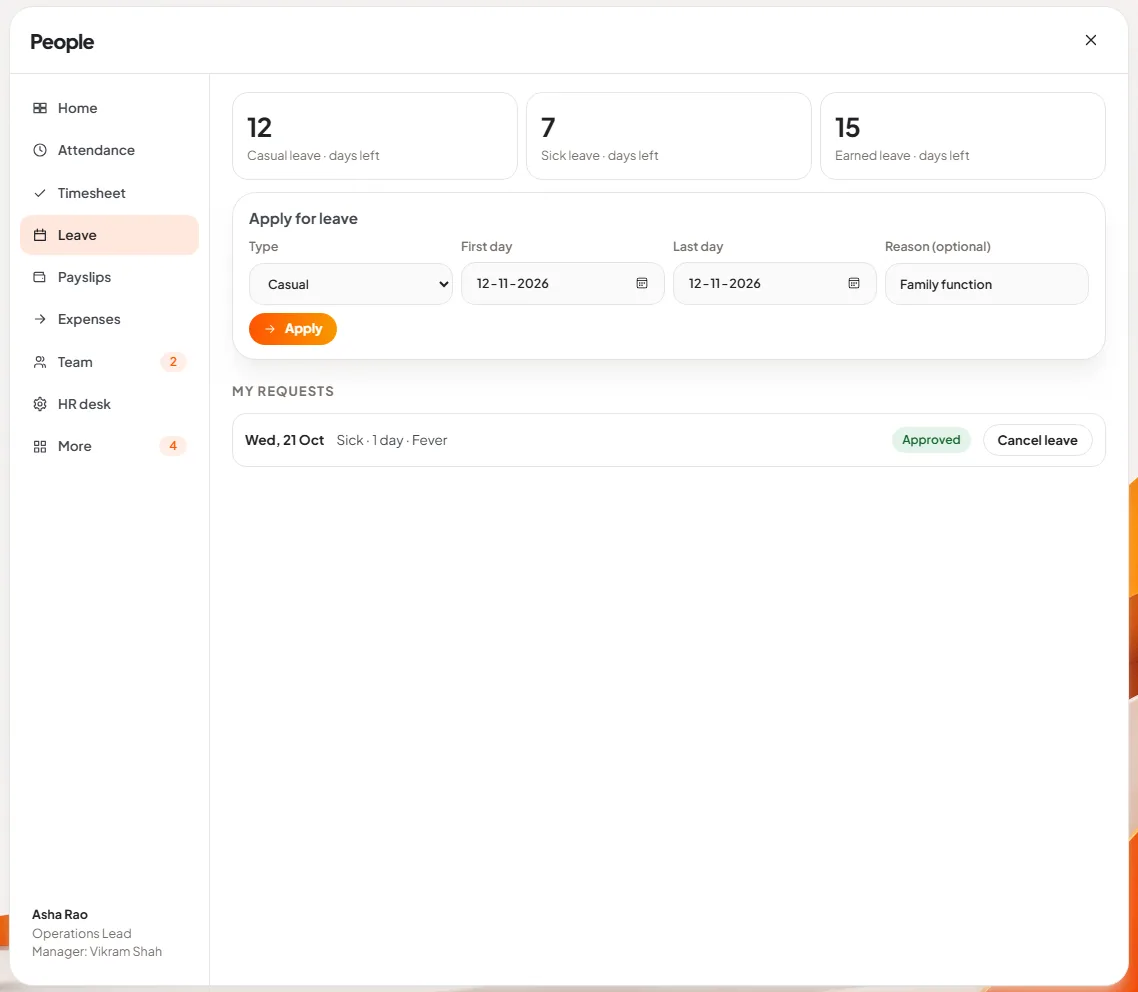
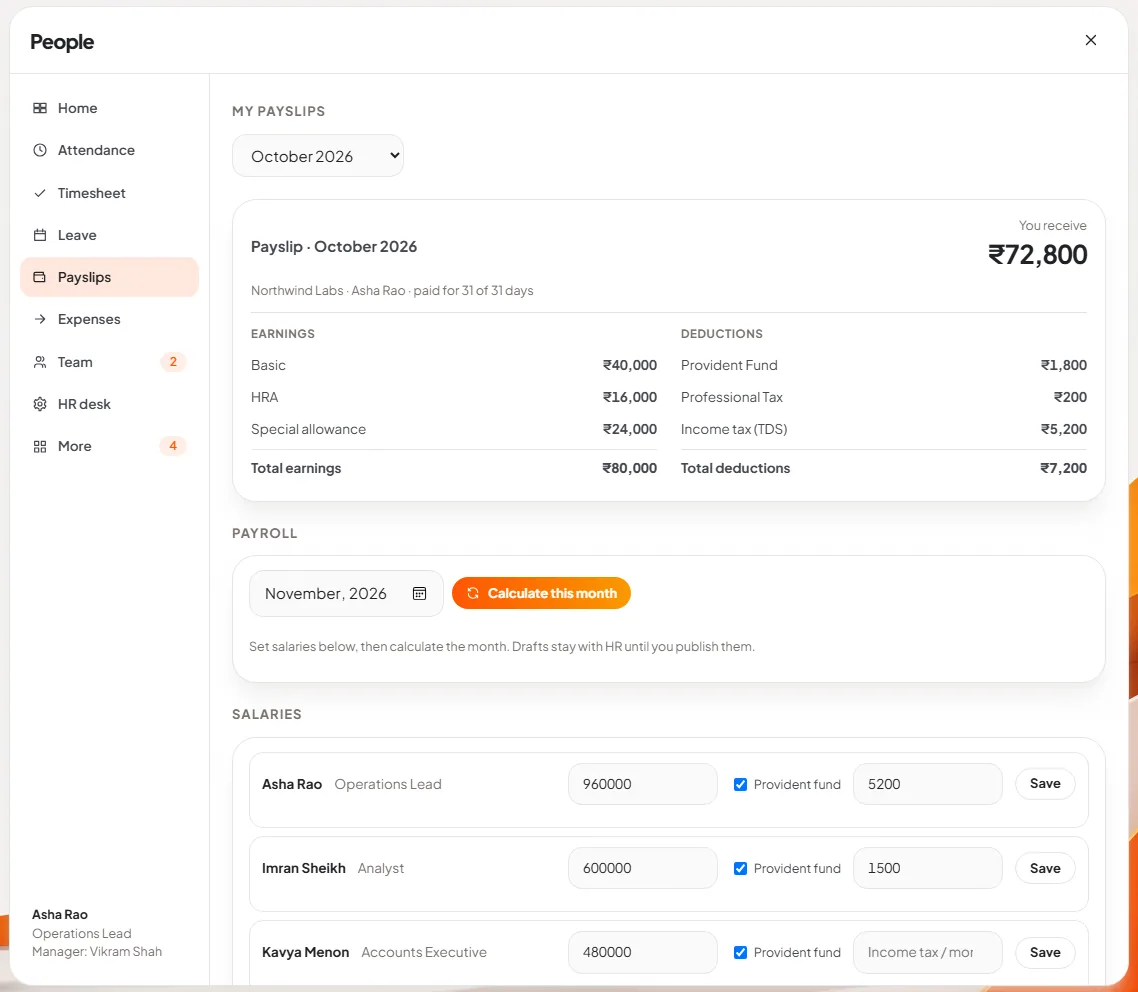
We give you the same advice about our own product as about anyone's: ask us to run a sample month and let your accountant check the statutory figures. DNX Hub is part of the beta programme that opens in December 2026, which is a good time to do exactly that.
Keep reading

Business intelligence without a data team
How a small company can get business intelligence without a data team: asking plain-language questions of its own data, and how to check the answers are right.

Disk encryption and device management, for owners
Full-disk encryption and device management for company laptops, explained for business owners: what each does, what a lost laptop exposes, and how to set up.

Vendor lock-in: how to choose software you can leave
Vendor lock-in explained for business owners: five ways software traps a company, a test to run before you buy, and how to keep an exit open with any tool.